Story: A chat with Damiano Robbiani

Custodians of memory

The Napoleonic militias bring the history and traditions of the Blenio Valley back to life, with costumes, pride and a strong sense of community.

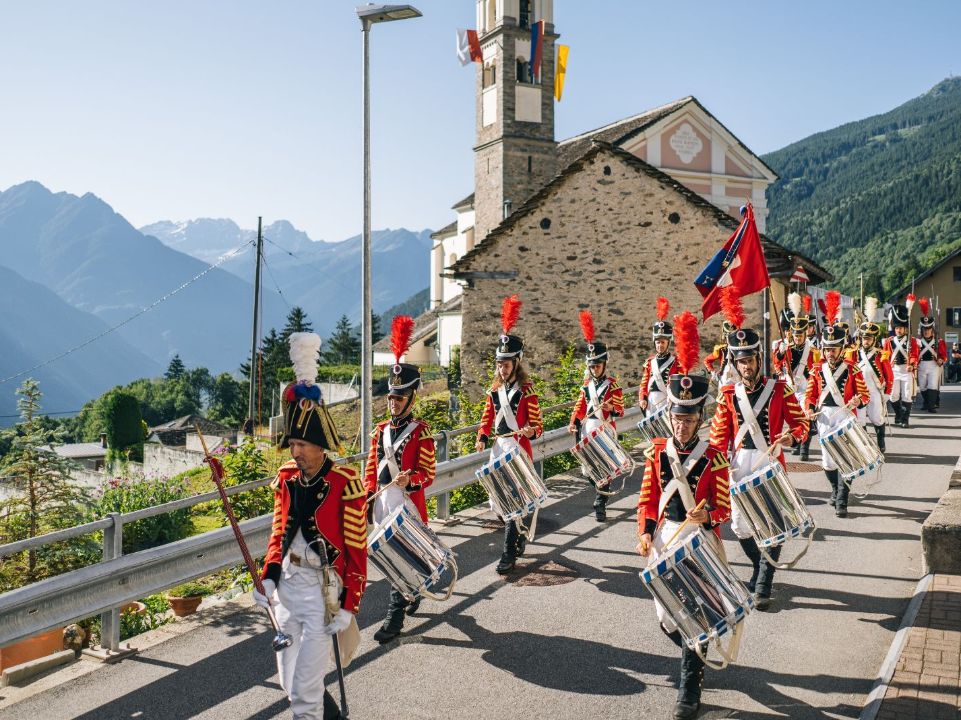
In summer, the villages of Aquila, Leontica and Ponto Valentino, in the Blenio Valley, dress up to celebrate the Napoleonic militias. A unique chance to discover the history, traditions and identity of the valley by engaging with the local community.

THE CHARACTER

Damiano Robbiani, Co-author of the work “Militias of the Blenio Valley – between history and memory”
Damiano Robbiani, Co-author of the work “Militias of the Blenio Valley – between history and memory”
The loyalty of the Blenio Valley people was the glue that kept these militias together, allowing them to endure to the present day.
THE COMPLETE STORY


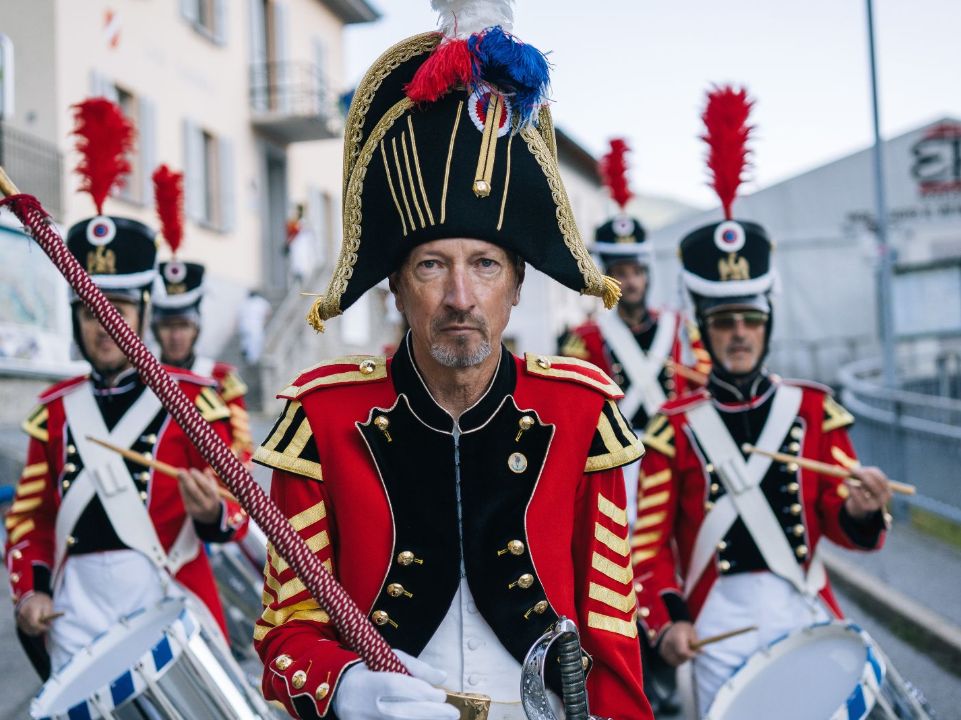
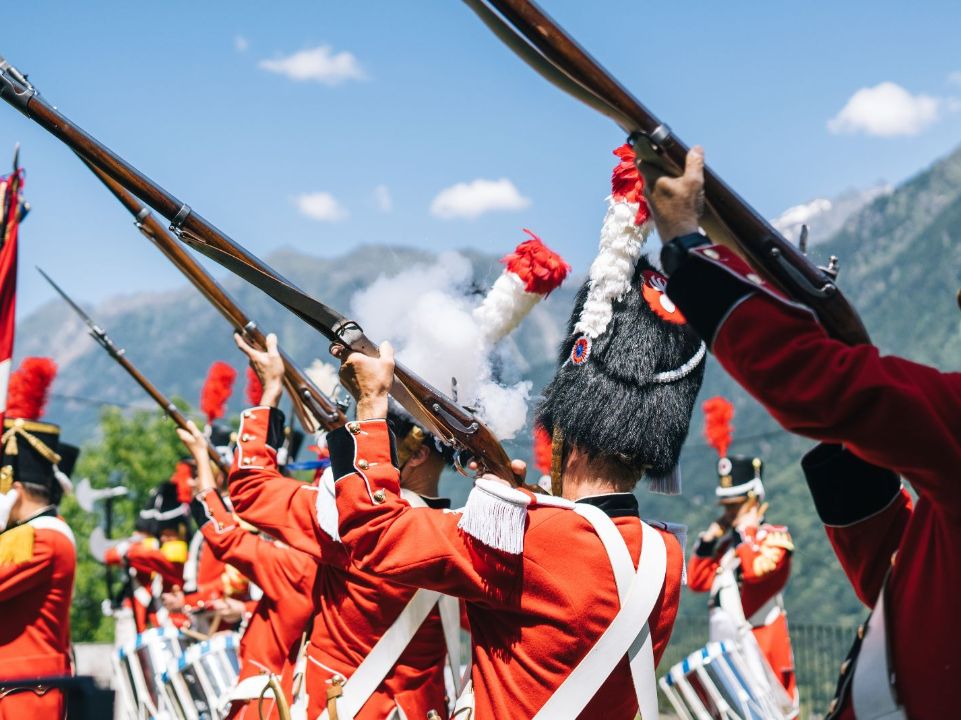
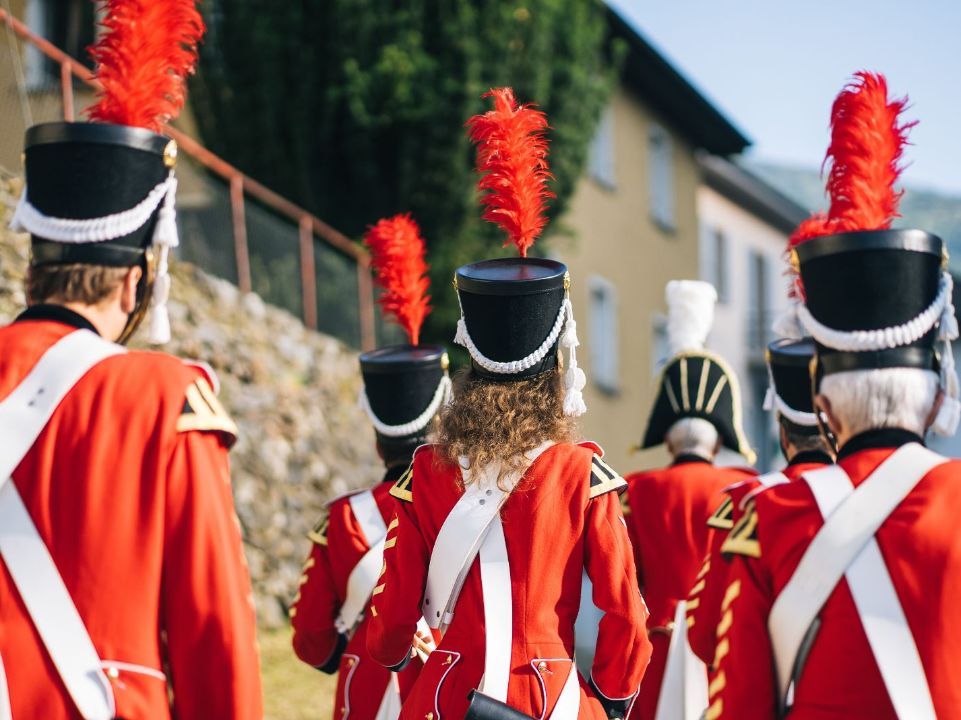
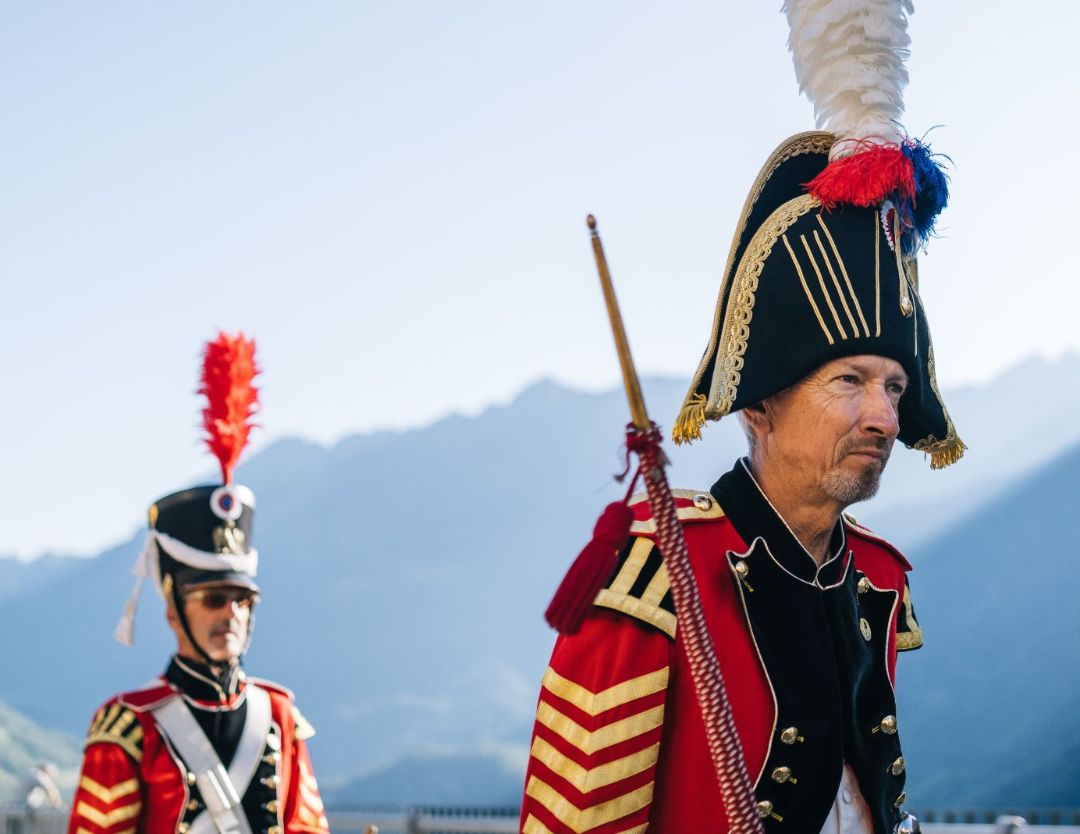
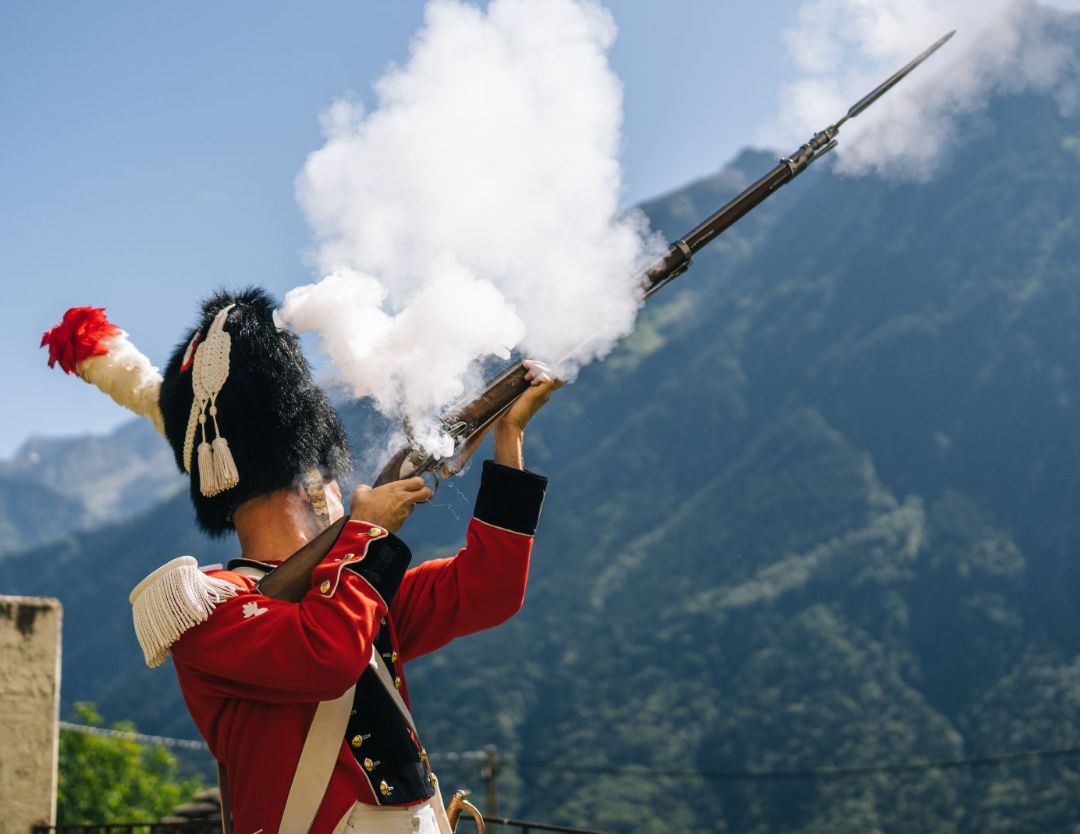
The origins of the Blenio Valley’s three military formations can be traced back to a specific historical event: the Battle of Berezina in 1812. Some soldiers from the valley, enlisted in Napoleon’s army, vowed to honour the Madonna and the patron saint of their villages if they survived the harsh Russian campaign and returned home. This promise, made as an act of gratitude, intertwines religious devotion with military ritual and, above all, reflects a deep sense of belonging to the local community. For more than two hundred years, the inhabitants of the three villages have proudly commemorated and renewed the promise of their ancestors during their patron saint festivals. In the processions, the vivid colours of the uniforms, the towering fur hats, the bayonets and sabres of the marching soldiers, the roll of the drums and the performance of ancient military and liturgical gestures take centre stage, embodying this long-standing alpine tradition. We explored this with historian Damiano Robbiani, co-author of Milizie della Val di Blenio – tra storia e memoria. Are you ready to take a journey down memory lane?

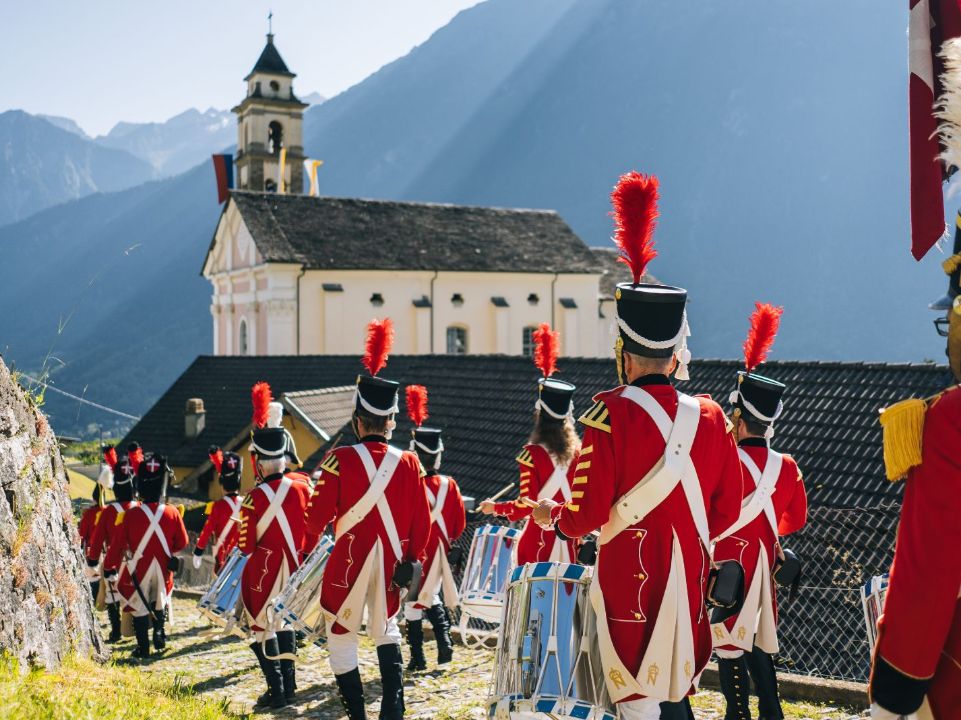
Every year, during the patronal festivities, the inhabitants of Aquila, Leontica and Ponto Valentino renew that promise with pride. The processions turn the villages into a vibrant open-air stage where vivid colours, shakos, bayonets, sabres, rolling drums and ancient liturgical gestures evoke a distant past that remains very much alive. It is a unique Alpine tradition, recognised in 2012 as part of Switzerland’s living heritage.

A university friend from the Blenio Valley introduced me to the historical Napoleonic militias.

The survival of the three militias is no coincidence: what has kept them alive over time is the community’s deep attachment to the patronal celebrations and the rituals surrounding them. Historical research reveals that similar formations once existed elsewhere in Ticino, yet only those of Aquila, Leontica and Ponto Valentino have preserved continuity and meaning. Migration also played a decisive role: emigrants returning from England, France or northern Italy wished to honour their village festivities with particular solemnity, gradually reinforcing the military character of the processions.

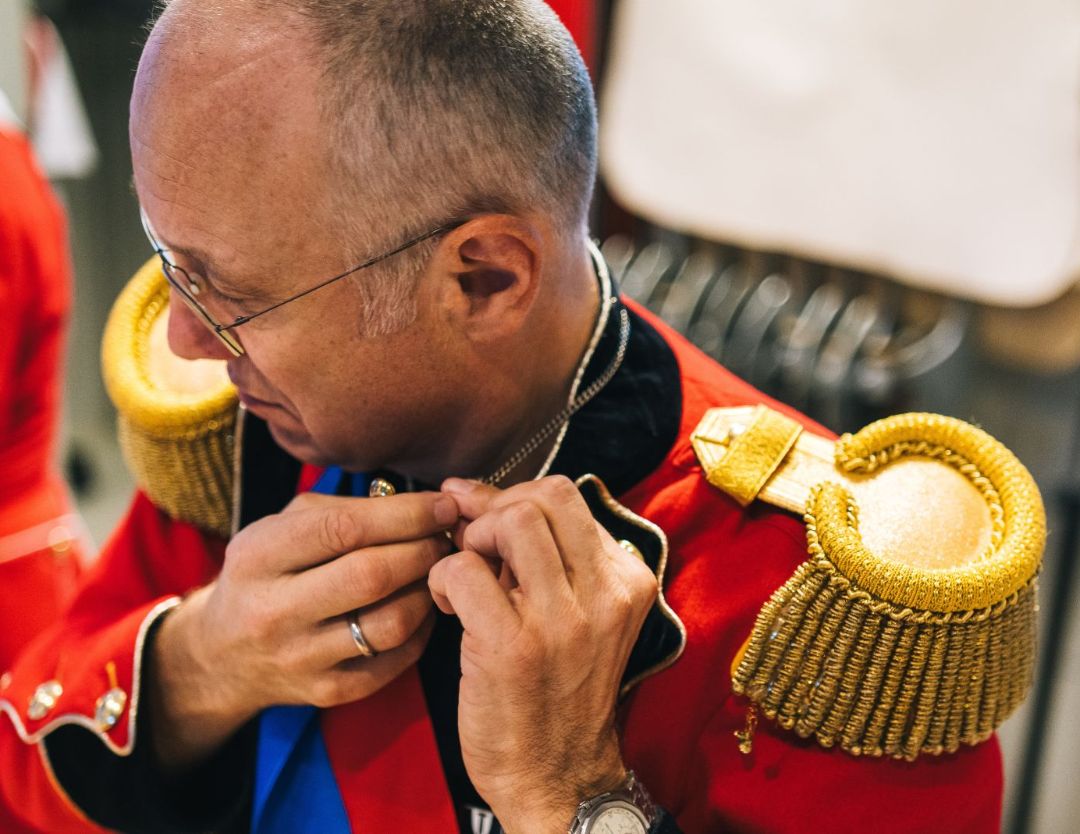
Each militia has distinctive traits: Aquila and Leontica wear uniforms faithfully inspired by the Napoleonic era, while Ponto Valentino has preserved the traditional 19th-century Swiss army attire, enriched over time by embellishments added by returning emigrants.

The roles, passed down through the ranks, demand commitment and dedication; some, such as those of the drummers, require genuine technical skill.

Pro tip
In the Blenio Valley, at the mountain hut Gorda, the GAIA room is available. It is a panoramic bedroom with fully glass walls.
Just before the Lucomagno Pass is the Luzzone dam. It features an artificial climbing route, which with its 165 metres is the longest in the world.
The Sentiero Alto Valle di Blenio winds its way between Loderio and Olivone - a fascinating panoramic hike to be completed in two stages.

Hidden behind this tradition are stories of remarkable emotional value.
In the archives of Aquila, for instance, letters from emigrants were discovered describing their profound longing to return home to honour the Madonna with gunfire and military dress.

These documents show how deeply these celebrations have contributed to shaping a strong sense of social cohesion within the valley.

Participating in the Blenio militia ceremonies is a moving experience, reflecting the villages’ strong ties, especially among the young.

Despite political, religious and social change, the historic militias of the Blenio Valley have crossed the centuries with striking resilience. Today they represent not only an essential element of local identity, but also an extraordinary experience for those who witness them up close: adults, young people and children united in a ritual passed down from generation to generation. Many believe this tradition will continue well into the future, sustained by renewed interest in its origins and by the community’s enduring commitment.

TIPPS FOR YOU


Stories

NEXT STORY