Trenino Artù Notice
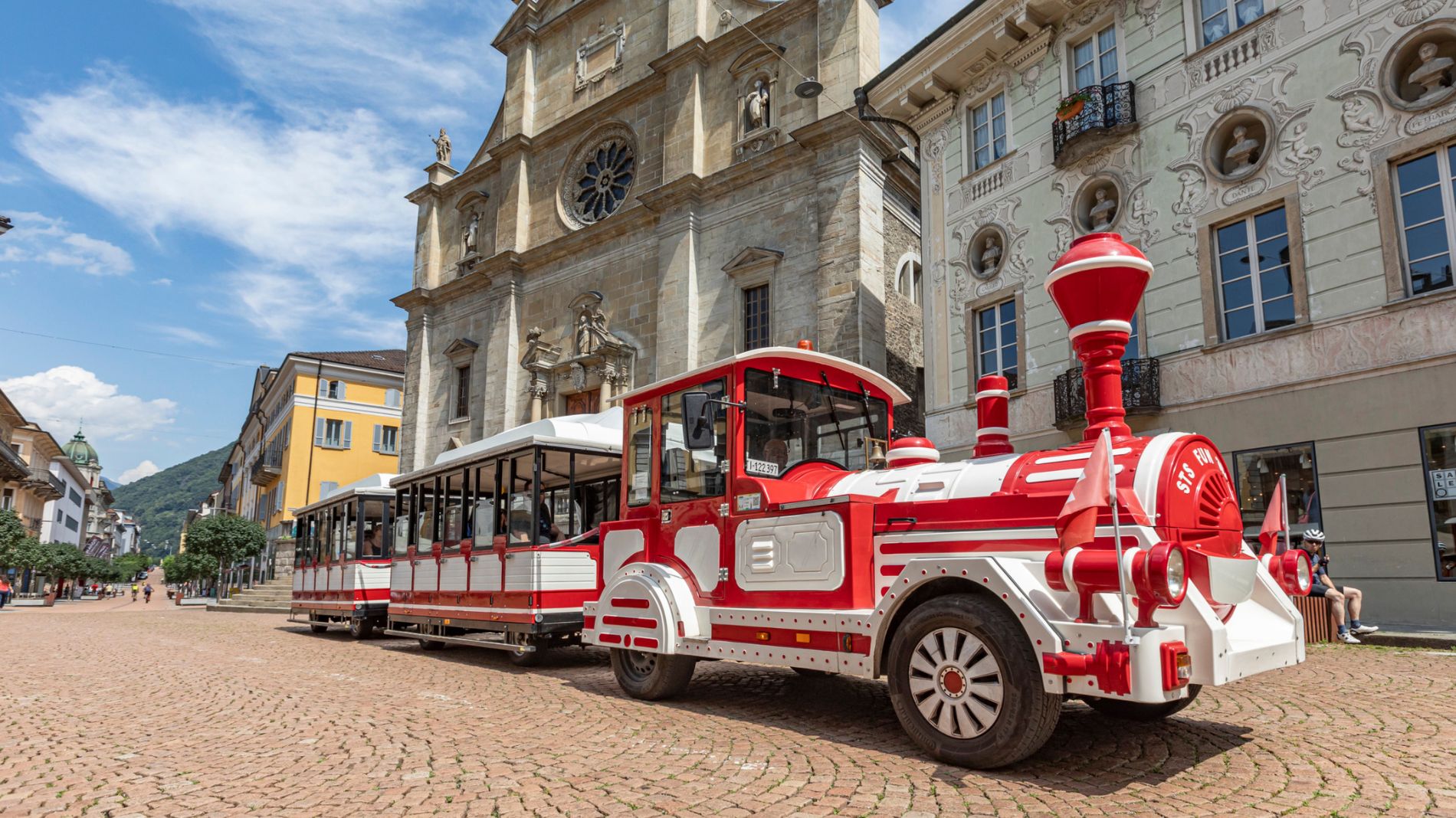
We would like to inform passengers that on Saturday, 26 September, the departure and arrival point of the Trenino Artù will be moved to Viale Stazione, near the Post Centre.
More informationFurnaces Route
 Theme Trail
· Bellinzona and Valleys
Theme Trail
· Bellinzona and Valleys
Furnaces Route

Bellinzona e Valli Turismo Verified partner
-
 FurnacesPhoto: Bellinzona e Valli Turismo
Along this interesting thematic path, several panels illustrate the lime cycle, divided into four main phases: charging the furnace, firing the stones, slaking the lime, and carbonation.
Limestone, a common sedimentary rock, is the basis for producing lime, a building material essential since ancient times. Lime, obtained by firing limestone and other materials containing calcium carbonate, was fundamental for the development of Humanity's Cultural Heritage and the art of construction. In the Blenio Valley, lime was used not only in construction but also in agriculture, with the locals building rudimentary ovens for its production. These furnaces, evidence of a productive past, were built near rivers or locations where limestone was extracted. In the region, many rustic buildings present on the territory are a living testimony, still reflecting the importance of these traditional practices today.
Author’s recommendation
Places to visit along the route and nearby:
Buttino
Once an independent municipality until 1836, it had its own small church and a confraternity. However, before this date, a devastating landslide struck the village, destroying it halfway.
San Giorgio e Martino
The Church of San Giorgio e Martino in Baselga has existed since 1215, initially dedicated to Saint Hilary. The current Baroque building was constructed around 1700, using the foundations of the previous structure. The façade is decorated with 18th-century frescoes depicting Saints George and Martin, with an image of the Madonna above the portal. Inside, above the central triumphal arch, there is a 15th-century crucifix with movable arms and head. The side chapels contain statues of Saint Anthony of Padua and the Virgin Mary, the latter adorned with 18th-century stuccoes. The pulpit and baptismal font date back to the 17th century, as does a confessional from 1667. A tomb has been found in the center of the floor. Additionally, there is a Baroque statue of the Madonna with Saint Dominic of Guzmán and Saint Catherine of Siena, made of carved, gilded, and polychrome wood, with high-quality artistic details.
Oratorio San Bernardino
The Oratory of San Bernardino in Cozzera, already mentioned in 1205, contains inside a fresco depicting the Crucifixion between Saints Bernardino of Siena and Anthony of Padua, along with a scene of mourning over the dead Christ, painted in 1774 by the painter Francesco Rotanzi from Faido. There was also a convent of the Humiliati in Cozzera, suppressed in 1570 by Pope Pius V. The convent hosted merchants and pilgrims heading towards the Greina, while the monks taught the population the art of weaving.
Among the notable figures from Cozzera are the lawyer Giuseppe Antonio Martinelli (1771), known in Milan, and Giorgio Maria Martinelli, born in 1655, founder of the college of Rho in 1714. Degiorgi Rocco, a professor, writer, and photography enthusiast, also comes from Ghirone.
“Acqua rossa” Aquilesco Spring
Continuing the walk southeast from the Aquilesco hamlet, you encounter the old road that, until 1958, was the only connection between Ghirone and Olivone. The new road was built in that year during the works for the Luzzone dam. A short distance from the start of this ancient road is a spring of ferruginous water with constant flow and temperature. In the 1970s, a project was conceived to create a small therapeutic center around the spring, but, with the promoter's disappearance, the initiative did not come to fruition.
Genziana Restaurant (Ponte Semina)
Until the early 1950s, there was a rustic place known as Osteria Genziana, managed by the Maestri family of Domenico. Domenico was the first producer of gentian in the valley, and for this reason, he was affectionately nicknamed "Genzanat".
Church of Sant’Agata and San Maurizio in Campo
The current building, with two naves facing south, dates back to the end of the 16th century. During the restorations of 1983, the foundations of a Romanesque chapel (circa 11th century), partially incorporated into the current structure, were uncovered. The church preserves 15th-century frescoes (remnants of the original chapel) and other valuable paintings in the two apses, attributed to the Tarilli family from Cureglia (late 16th - early 17th century). Noteworthy is an oil painting from 1592, protected by glass, depicting the Virgin with Child, commissioned by the De Ripa Campesi brothers of origin. In 1608, Cardinal Federico Borromeo elevated the Church of Saints Maurizio and Agata to an autonomous parish, separating it from that of Olivone.


Bellinzona e Valli Turismo Verified partner
Track types
Rest stops
Pineta Saracino (Bike friendly)Albergo Genziana
Ristorante Casa Greina (Bike friendly)
Ghirone, Aquilesco
Ponte Semina
Albergo Genziana
Ponte Semina
Haltestelle Campo Blenio
Campo (Blenio), Paese
Ristorante Casa Greina (Bike friendly)
Coordinates
Weather at the starting point
Statistics
- Content
- Show images Hide images